DEVELOPMENT / FROM RULE TO FORM
How the idea took shape.
A question about fictional magic grew into particle rules, proposed toy designs, an original world, and a provisional patent application.
ORIGIN / DESIGN PROGRESSION
From a question to a design.
Will wondered what would happen if wizards treated magic the way coders treat code. When his friend Adam asked how it would work, Will began with a quantum-inspired fictional particle and worked backward to make its behavior consistent.
- 01 / FICTIONAL RULE
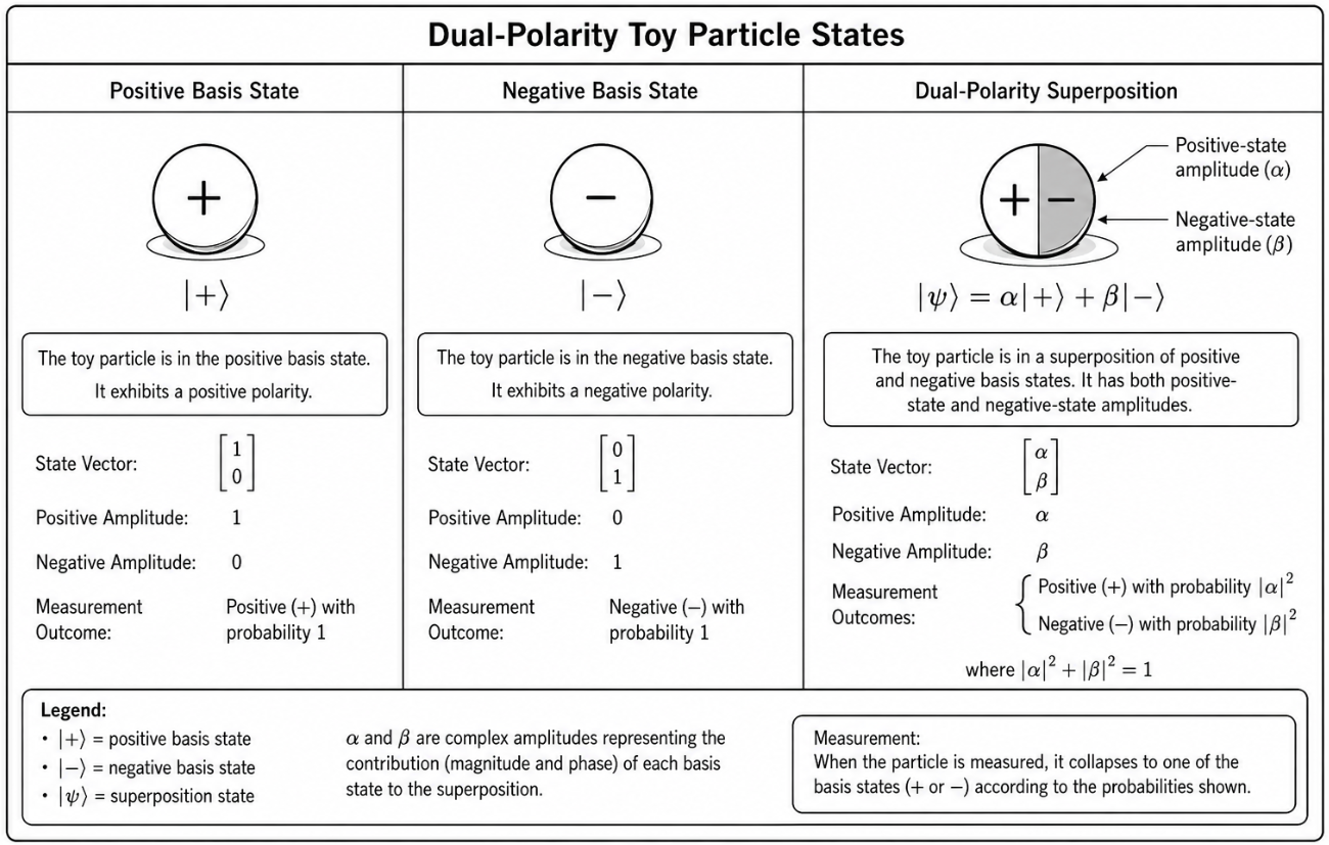
Positive, negative, and dual polarity
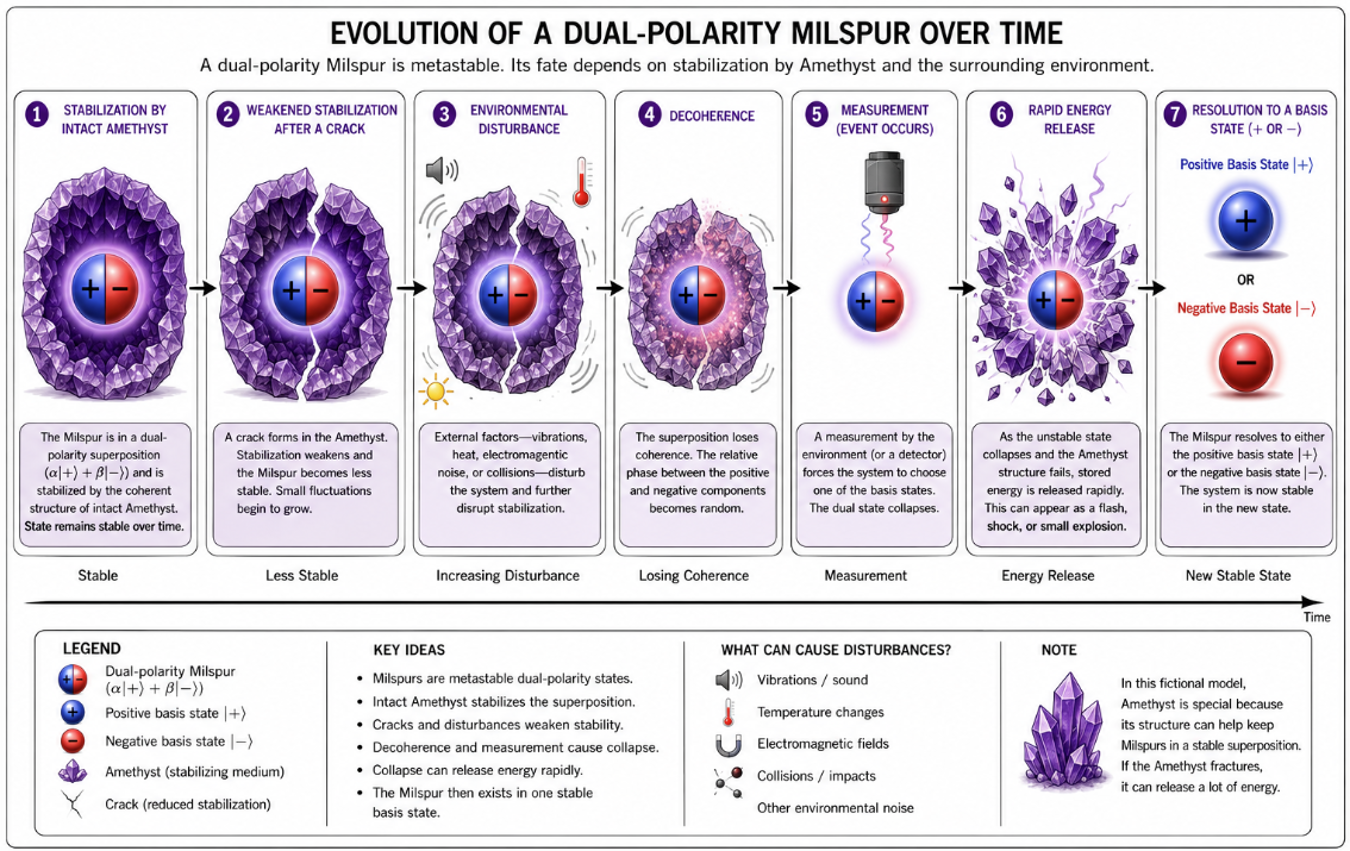
The dual state raised a design question: how could a less stable state be represented, and what would make it change?
- 02 / MATERIAL CONSEQUENCE
Amethyst becomes a stabilizer
Within the fictional rules, intact Amethyst can stabilize the dual state; a crack or disturbance can change the outcome.
- 03 / PHYSICAL REPRESENTATION
Give the rule a body
The patent application describes mechanical, magnetic, and electronic ways a toy could show its state and respond to nearby particles.
- 04 / HUMAN CONTEXT
Ask who lives with the rule
Will explored how the rules and resource shortages could affect institutions, conflicts, and everyday life through stories and worldbuilding.
THE PROPOSED PHYSICAL PRODUCT
A particle with a state,
a response, and a rule.
Show the state
A body could use a dial, color, light, symbol, movement, texture, or sound to represent positive, negative, or dual polarity.
Let particles interact
Coupling and response features could make two particles attract, repel, connect, light up, or otherwise respond under a chosen rule set.
Let the state change
The dual state can be less stable. In some versions, an Amethyst-themed element changes its stability; a disturbance can change the outcome.
These are possible implementations described in the patent application.
TRY THE FICTIONAL RULE
A state can change the next move.
This small website interaction explains the three proposed states. It is a presentation demo, not a physics simulation or connected physical prototype.
SELECT A MILSPUR STATE
The fictional superposition is less stable and can be affected by Amethyst or a disturbance.
PATENT APPLICATION DRAWINGS
Look at the design.
CURRENT DEVELOPMENT STATUS
The next questions are practical.
The patent application and its figures describe embodiments. Turning those designs into physical play is the next development challenge.
The shared world is still developing. Maps, historical periods, and foundational lore need further work before community submissions open.
Working in a patent law office helped Will understand the patent application process. Preparing his own patent application required him to describe possible implementations and consider how the design could be developed.
EXPLORE THE NEXT LAYER
The writing tests the system.
Read Will’s actual story drafts and world reference documents in the Milspur Archives.